
Why PBSA Marketing Needs to Change: From Selling Rooms to Selling the Experience
the old marketing playbook is no longer enough.
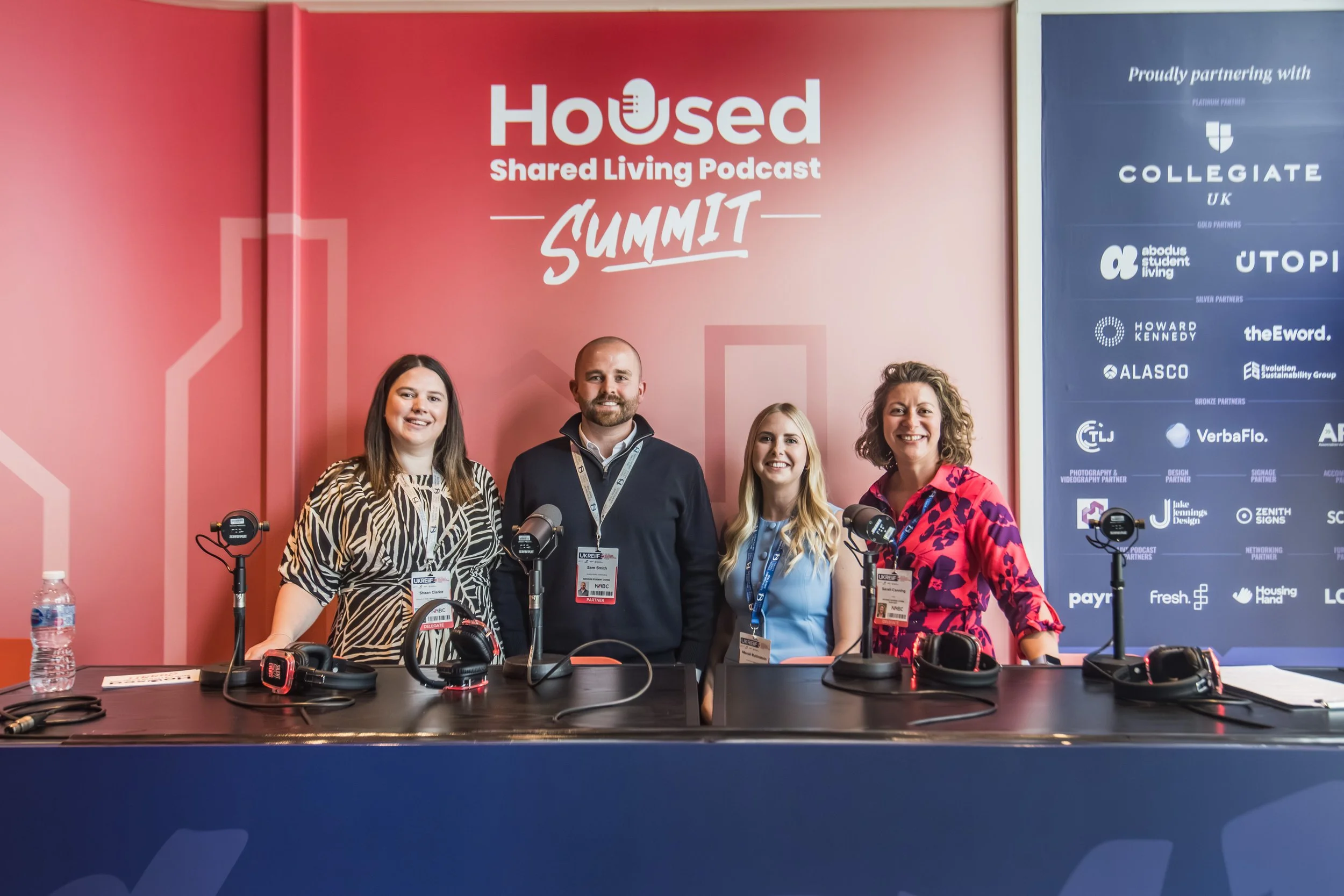
The PBSA market is changing fast. From tighter digital advertising regulations and the rise of AI to shifting student expectations and the growing importance of authentic content, the old marketing playbook is no longer enough.
A panel of marketing and resident experience experts explored what it takes to stand out in an increasingly competitive student accommodation market – and why the future of PBSA marketing is about much more than selling a room.
Here are some of the key insights from the conversation.
Authenticity is becoming the new currency
For years, PBSA operators have invested heavily in polished photography, professionally produced videos and beautifully rendered CGIs. But while this content still has an important role to play, particularly when it comes to reassuring parents and building credibility, students are increasingly looking for something different.
They want to see what life is really like.
The panel highlighted a growing appetite for resident-led, informal and authentic content – from "day in the life" videos to social content showing how spaces are actually used.
As AI-generated content becomes more sophisticated and increasingly commonplace, authenticity could become even more valuable. Students are highly digitally literate and can quickly spot content that feels artificial or overly polished.
The challenge for operators is therefore not to abandon professional content, but to find the right balance.
High-quality imagery and video still have a role on the website, helping to communicate the quality and credibility of a product. But social channels provide an opportunity to show the reality behind the marketing – the people, the community and the experience of living there.
One example discussed was the use of resident-created content to answer the questions that prospective students genuinely want to know. How big is the wardrobe? What can you actually fit in it? What does a typical day look like?
These are the details that can bring a building to life in a way that a perfect room photograph simply can't.
The algorithm has changed the role of creative
The shift towards authentic content isn't just about changing consumer preferences. Changes to digital advertising regulations are also forcing marketers to rethink how they reach their audiences.
With restrictions on targeting through platforms such as Meta, marketers can no longer rely on the highly specific audience targeting that was once available.
Instead, the creative itself has to work harder.
If you can't target someone as precisely based on their age, interests or university, your content needs to make it immediately clear who it is for.
That means creating different stories for different audiences – even if the underlying product is the same.
A student may want to see the social experience, the community and what their day-to-day life could look like. A parent may be more interested in safety, wellbeing, support and the quality of the accommodation.
The message can't simply be the same room photography served to everyone.
In an increasingly algorithm-driven advertising environment, creative is becoming the targeting mechanism.
Brand isn't just a logo
One of the most interesting debates centred on the role of brand in PBSA.
Is the brand of an accommodation operator really important, or is it ultimately about the building itself?
The panel's conclusion was that brand matters – but perhaps not in the traditional sense.
In a market where many buildings offer similar rooms, amenities and price points, the real opportunity for differentiation lies in the experience surrounding the product.
That experience starts long before a student moves in.
A complicated website or booking journey can damage brand perception just as quickly as a poor experience on site. If a prospective resident struggles to find information, can't get an answer to a question or is left waiting days for a response, they may simply move on to a competitor.
The panel highlighted research showing that 77% of young professionals can be put off renting a property by a complicated website or booking process, while 47% of students want a response to an enquiry on the same day, with 20% expecting a response within just a few hours.
The lesson is clear: the customer experience is the brand.
Every interaction – from the first social media post to the website, enquiry response, viewing, booking journey and eventual move-in – contributes to how a resident perceives an operator.
Stop selling rooms. Start selling the experience.
If most PBSA operators are competing with similar products, at similar price points and in the same locations, how do you stand out?
The answer from the panel was simple: stop selling rooms and start selling the experience.
Students aren't just buying four walls and a bed. They're buying into a lifestyle, a community and a sense of belonging.
This creates a significant opportunity for operators to tell a richer story about what they offer.
That could mean highlighting the practical benefits of living in PBSA – such as convenience and access to amenities – but it also means communicating the less tangible benefits.
How does the accommodation help students build confidence? Make friends? Develop life skills? Prepare for employment? Look after their wellbeing?
One example shared during the panel was the introduction of talks and experiences designed to support residents beyond their academic studies, including a session with Olympic swimmer Adam Peaty focused on resilience.
These are the experiences that can become part of a brand's identity.
As one panelist put it, the difference between operators may increasingly come down to storytelling and service, rather than the physical product itself.
PBSA needs to own its unique proposition
The growth of BTR, co-living and the private HMO market means PBSA is no longer operating in isolation.
The panel discussed the need for operators to clearly communicate what makes student accommodation different – and why those differences matter.
PBSA has the potential to offer much more than a room.
It can provide community, convenience, wellbeing support, on-site amenities and opportunities for personal development. It can help students navigate the transition into adulthood and provide a level of support that they may not get elsewhere.
But these benefits only have value if operators communicate them effectively.
If PBSA marketing focuses solely on price, room size and flexibility, it risks competing on the very factors where other accommodation types may have an advantage.
The opportunity is to tell the bigger story.
And that story needs to be backed up by the reality of the resident experience.
AI should remove the admin – not the humanity
No conversation about the future of marketing would be complete without discussing AI.
The panel was broadly positive about its potential, but clear that AI should be used to enhance the customer journey rather than replace human interaction.
There are obvious opportunities.
AI can help operators respond to enquiries more quickly, provide information 24/7, communicate in different languages and reduce the administrative burden on busy teams.
It can also support marketers behind the scenes, helping with tasks such as summarising information, analysing sentiment, testing campaigns and handling straightforward enquiries.
The principle is simple: let AI do the legwork so people can focus on the work that requires creativity, empathy and judgement.
This is particularly important in PBSA, where the product being sold is fundamentally about people and community.
AI might be able to answer a question about room availability. It can't replace the reassurance of speaking to a member of the site team who understands a student's concerns.
And it certainly can't create the genuine human connection that students are looking for when deciding where they will live.
The next frontier: AI-powered search
While AI may not replace human interaction, it is already changing how people discover products and services.
The panel discussed the growing importance of AI search – and the need for operators to consider how their brands appear in tools such as ChatGPT and other AI platforms.
Just as businesses have spent years optimising their websites for traditional search engines, they may now need to think about how they are represented in AI-generated answers.
The implications for PBSA could be significant.
Imagine a student asking an AI tool to find the best student accommodation in a particular city, compare options and eventually help them book.
The customer journey could become increasingly conversational and automated, with traditional websites potentially becoming just one part of a much wider ecosystem.
For operators, that means understanding not only how students search today, but how they will search tomorrow.
Organic content isn't free – and it shouldn't be treated that way
One of the audience questions focused on organic social content and whether the investment is justified when engagement can be unpredictable.
The panel's response was that organic content shouldn't necessarily be judged purely on its ability to generate immediate bookings.
Students are making a significant decision when choosing accommodation. They may live there for a year, and potentially spend thousands of pounds.
That means the decision-making journey starts long before the booking.
Organic content plays an important role in building awareness, trust and familiarity. It allows prospective residents to understand the experience and picture themselves living there.
The challenge is that these benefits are difficult to attribute directly to revenue.
This can make organic activity harder to secure budget for – particularly when paid campaigns can be more easily linked to leads and bookings.
But the panel argued that authentic, organic content should be viewed as part of the wider conversion journey.
It may not generate the booking directly, but it can influence the decision that ultimately leads to it.
Marketing needs to become more personal
The final takeaway from the discussion was perhaps the most important.
There is no such thing as a single "student".
The needs of a domestic student can be very different from those of an international student. A student moving away from home for the first time may want something completely different from a commuter student who is reluctant to leave home.
Some students are looking for independence. Others want the comfort of a home-from-home environment.
Some prioritise social experiences. Others value quiet spaces, wellbeing support or academic success.
That means the future of PBSA marketing can't be built around a generic lifestyle proposition.
It needs to be more nuanced, more personalised and more closely connected to the actual needs of different audiences.
This extends beyond marketing and into the resident experience itself.
One example shared by the panel was a site team that speaks to every student before they move in, getting to know them and using that information to help create compatible living arrangements.
This is where marketing, operations and resident experience come together.
The promise made during the marketing journey has to be delivered once the student arrives.
The future of PBSA marketing is human
The biggest message to come out of the discussion was that the future of PBSA marketing isn't about choosing between technology and people.
It's about using technology to make the experience faster, easier and more relevant – while investing more heavily in the things that technology can't replicate.
Authentic content.
Human connection.
Personalised service.
Community.
Wellbeing.
And experiences that genuinely add value to a student's life.
The operators who succeed will be those that recognise that the product is no longer enough.
The future of PBSA marketing is about selling the experience – and then making sure the experience lives up to the promise.
This discussion took place at the Housed Summit at UKREiiF on 21st May 2026.
———————————————————————————————————————————————————————————————————————-
The topics in this conversation will be continued on the Housed Shared Living Podcast - listen each week via all major podcast plaforms.