
Beyond Politics: Putting ED&I, Sustainability and People at the Heart of Shared Living
The shared living sector has never operated in a vacuum.
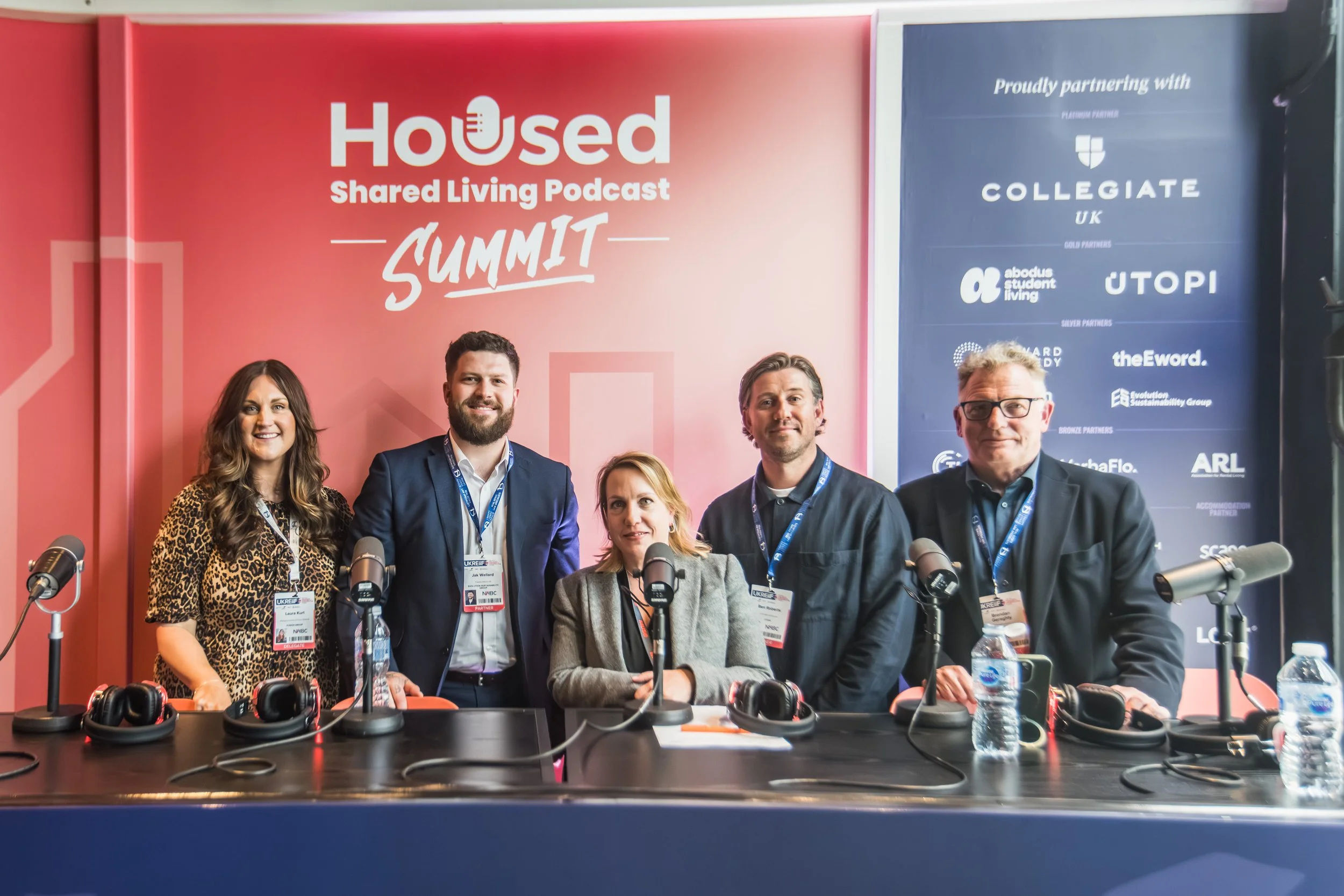
Global uncertainty, political change, economic volatility and shifting social expectations all influence how we build, operate and invest in housing. Yet at the Shared Living Summit, one panel made a compelling argument: while political cycles come and go, the fundamentals of creating great places to live remain unchanged.
The discussion explored everything from ESG and customer experience to long-term thinking, housing design and the future of rental living. What emerged was a clear message for the sector: focus on people, build for the long term and don't get distracted by short-term political noise.
Real Estate Thinks in Decades, Politics Thinks in Years
One of the most powerful themes throughout the discussion was the contrast between political cycles and property cycles.
While governments change every few years, housing assets are expected to perform for decades. Investors, developers and operators therefore face a choice: react to every political headline or stay focused on long-term value creation.
As one panellist put it:
"Real estate life cycle – we're looking at 10 years, 20 years, 30 years. Political life cycle is four years."
The consensus was clear. While political uncertainty creates challenges, it should not dictate long-term investment strategies.
Instead, the sector must continue to focus on delivering quality housing, building sustainable communities and creating places that stand the test of time.
Customer Experience Is No Longer Optional
The panel also challenged the industry to think more deeply about the people who actually live in its buildings.
While discussions around investment, planning and viability often dominate industry conversations, residents remain the foundation of every successful living asset.
Laura highlighted the importance of aligning customer experience with a company's strategic priorities.
"We have to invest very heavily because we're a premium product. We want people to have a higher return on their value, so our customer service is incredibly important."
For operators, resident experience is no longer a secondary consideration. In an increasingly competitive market, customer satisfaction is directly linked to occupancy, retention and long-term asset performance.
Ben echoed this point from a student housing perspective:
"Students are going to vote with their feet."
Residents today have more choice than ever before. Operators that can clearly demonstrate quality, service and community value are increasingly the ones that succeed.
Are We Building What People Actually Want?
One of the most thought-provoking moments of the session centred on the industry's tendency to repeat familiar formulas.
Cinema rooms, games spaces and extensive amenities have become standard features across many residential developments. But are they always what residents want?
Stephanie challenged the sector to move beyond "tick-box" development.
"We're still building a lot of what we've always built."
She argued that operators need to become better listeners, using resident feedback and operational data to shape future developments rather than relying on assumptions.
Perhaps the most memorable exchange came when discussing underused amenities.
"Nobody uses cinema rooms."
The comment drew laughter, but it also highlighted a serious point. The future of housing design should be driven by evidence and flexibility, not trends.
Community Extends Beyond the Building
Another recurring theme was the importance of thinking beyond the physical asset.
Modern living developments are often designed as self-contained communities, offering workspaces, social spaces, gyms and amenities within a single building.
While these facilities undoubtedly add value, the panel argued that operators must also consider their role within the wider neighbourhood.
"It's also about the greater neighbourhood. It's about supporting your local businesses."
Successful developments should not isolate residents from their surroundings. Instead, they should act as catalysts for stronger local communities.
This broader view of placemaking is becoming increasingly important as shared living evolves from a niche concept into a mainstream housing solution.
Building for Future Generations
The conversation took an unexpected but powerful turn when discussing the idea of legacy.
Drawing on Indigenous wisdom, one panellist shared a principle that resonated across the room:
"You always look back six generations and you look forward six generations."
It was a reminder that housing decisions made today will affect communities for decades to come.
The challenge for the industry is therefore not simply to build quickly, but to build responsibly.
That means creating homes that are adaptable, sustainable and capable of meeting changing needs over time.
The Case for More Flexible Buildings
The panel also explored whether the sector is building assets that can genuinely evolve.
Many first-generation purpose-built residential assets are already undergoing significant refurbishment despite being relatively new.
That reality raises important questions about longevity and adaptability.
Laura argued that flexibility must become a core design principle.
"It's about flexibility."
Buildings should be designed not just for today's residents, but for future generations whose needs may look very different.
Similarly, Jak stressed the importance of future-proofing assets from the outset.
"We need to start thinking about building adaptable, efficient, future-proof buildings."
In an era where viability pressures often dominate decision-making, the panel suggested that long-term resilience should carry greater weight.
ESG Is No Longer a Choice
Despite broader political debates around ESG, diversity and sustainability, the panel was unanimous that these issues are now embedded within the living sector.
Rather than seeing ESG as a compliance exercise, speakers described it as a commercial reality.
As Ben noted:
"If you pull back from any of those things over the next five-year cycle, your buildings will just be worth less money."
The argument was straightforward: residents increasingly care about sustainability, investors increasingly demand it, and future occupiers are likely to expect even higher standards.
For housing providers, ESG is becoming less about ideology and more about long-term asset performance.
Being Good Ancestors
The session closed with a thought that perhaps best captured the mood of the discussion.
In a world increasingly dominated by short-term political cycles, market uncertainty and economic volatility, the shared living sector has an opportunity to think differently.
Housing is fundamentally about people.
It is about creating places where individuals can thrive, communities can form and future generations can flourish.
As one panellist reflected, the challenge for everyone in the sector is simple:
"Don't retreat. Mature."
The future of shared living will not be defined by political headlines or market cycles alone.
It will be shaped by the decisions made today about how we build, how we operate and, ultimately, how we serve the people who call our buildings home.
"We need to start thinking about building adaptable, efficient, future-proof buildings."
"If you pull back from any of those things over the next five-year cycle, your buildings will just be worth less money."
"Don't retreat. Mature."
This discussion took place at the Housed Summit at UKREiiF on 20th May 2026.
———————————————————————————————————————————————————————————————————————-
The topics in this conversation will be continued on the Housed Shared Living Podcast - listen each week via all major podcast plaforms.