
AI, Data and the Human Touch: What Shared Living Can Learn from the Next Wave of Technology
Artificial intelligence is no longer a future trend for the living sector — it's already here.
From resident communications and customer service to data management and operational efficiency, AI is rapidly becoming embedded in the way housing providers engage with residents and run their businesses.
But as a recent expert panel made clear, the real opportunity isn't about replacing people. It's about creating better experiences, more consistent service and giving resident’s greater choice.
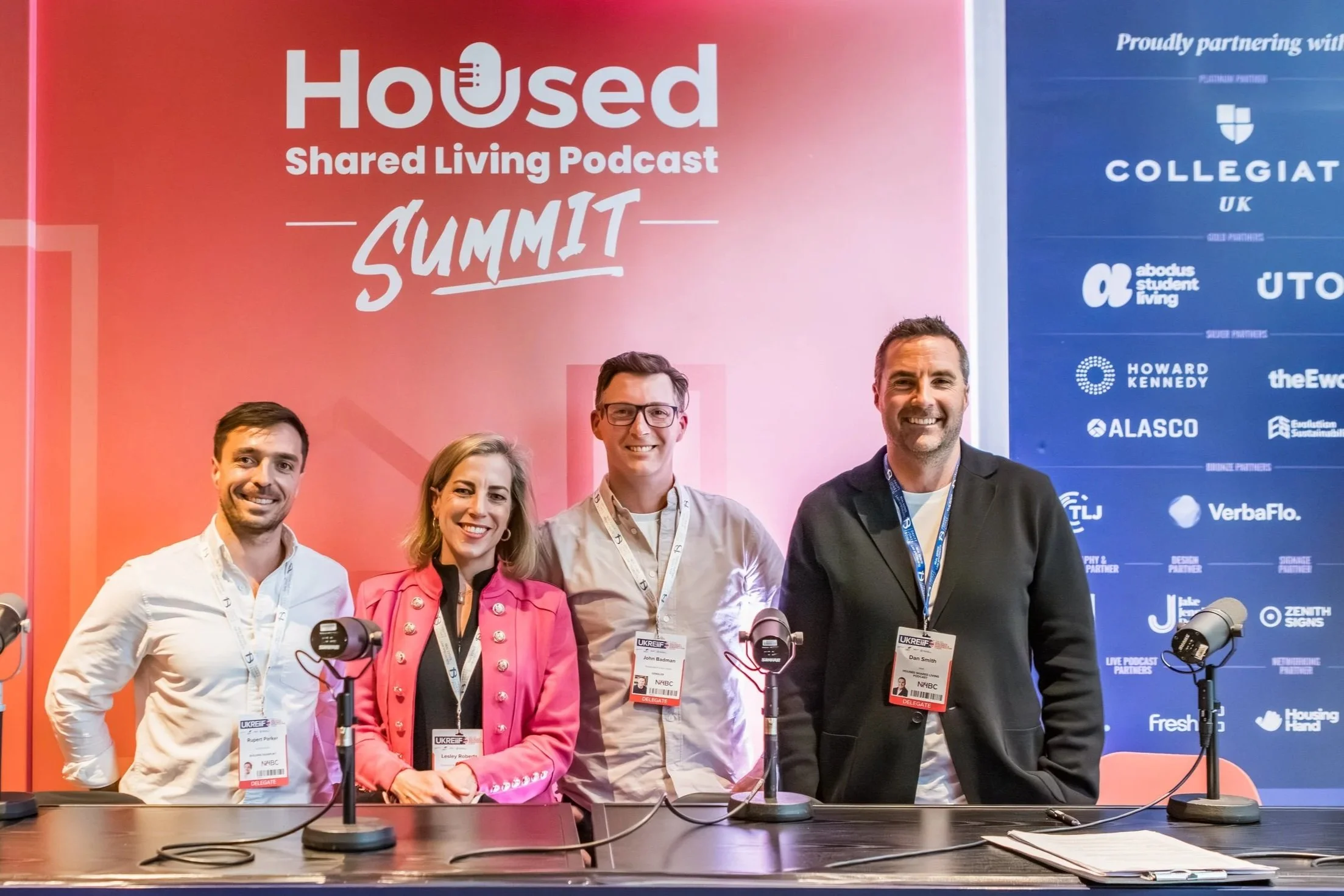
The discussion brought together operators, consultants and technology experts to explore how AI is being deployed today, where the risks lie, and why the sector must strike the right balance between automation and human connection.
AI Is Solving Everyday Problems, Not Creating Sci-Fi Futures
One of the strongest themes to emerge from the conversation was that the most successful uses of AI are often the simplest.
Rather than focusing on futuristic concepts, operators are using AI to solve practical operational challenges.
Leslie shared how her organisation developed AI-powered communication avatars to help create consistency across resident communications.
With multiple team members, different communication styles and diverse resident demographics, maintaining a consistent tone had become increasingly difficult.
"We wanted to have a consistency of communication with our residents in those particular developments."
The solution was to create AI personas tailored to specific resident communities.
The initiative started as an experiment.
It quickly became a valuable operational tool.
"We developed some avatars, and they're great."
Importantly, these avatars aren't replacing human interaction. They're helping teams communicate more effectively and consistently.
The Rise of the AI Assistant
For operators, one of the biggest opportunities lies in customer service.
Dan Smith shared data demonstrating how AI can manage large volumes of resident enquiries across multiple channels.
"Around 90% of the enquiries are actually triaged and handled by AI"
These interactions span:
WhatsApp
SMS
Email
Webchat
Telephone enquiries
In many cases, residents don't even realise they're interacting with AI.
The technology is becoming increasingly sophisticated, handling routine enquiries while freeing up teams to focus on higher-value interactions.
Yet the panel was unanimous on one point: efficiency should never come at the expense of community.
Don't Throw the Baby Out With the Bathwater
Perhaps the most memorable phrase of the session became an unofficial theme for the discussion.
"Don't chuck the baby out with the bath water."
While AI can automate repetitive tasks, the panel warned against viewing technology as a replacement for people.
In a world where every operator may eventually have access to similar AI tools, human connection could become the ultimate differentiator.
Dan argued that community building will only become more important as technology becomes more widespread.
"That USP is quite clearly going to be that personal nature."
For the shared living sector, where resident experience and community are core to the product offering, this distinction matters.
Technology can enhance service.
It cannot replace belonging.
Choice, Not Replacement
The panel repeatedly returned to the idea that residents want different things. Some residents value regular interaction and community engagement. Others prefer minimal contact and greater independence. AI creates opportunities to accommodate both.
As Leslie explained:
"Some customers don't want interaction, that's absolutely fine, but some want a lot."
The result is a more flexible resident experience.
Rather than replacing staff, AI enables operators to provide multiple service pathways while allowing teams to focus their attention where it adds the most value.
"It's actually just creating more options that satisfy our customer."
The Biggest Challenge Isn't AI — It's Data
While much of the public conversation focuses on AI itself, the panel suggested that the real challenge lies elsewhere.
Data.
Specifically, fragmented data.
Rupert highlighted one of the industry's most significant barriers to AI adoption:
"The biggest issue or hurdle that we've got as an industry to adopting AI is the fact that we have data silos."
Across the living sector, information is often spread across:
Property management systems
CRM platforms
SharePoint repositories
Asset management databases
Operational spreadsheets
Without connected data, AI tools are limited in what they can achieve.
As ownership changes and assets transfer between operators, valuable knowledge can also become trapped within isolated systems.
The challenge is not simply gathering more data. It's making existing data usable.
Why Data Security Matters More Than Ever
Alongside the opportunities, the panel spent considerable time discussing the risks.
As AI adoption accelerates, organisations must become increasingly disciplined about how information is handled.
John Badman offered a stark warning about the dangers of uploading sensitive information into public AI tools.
"Don't allow anyone to just go off with ChatGPT and upload a lease."
The concern is straightforward.
Many public AI systems learn from the information users provide. Without proper controls, commercially sensitive or confidential information could be exposed.
The panel stressed the importance of secure, controlled environments for AI deployment.
"Keeping everything secure in the four walls of a silo, a data silo, or a data lake... is absolutely vital."
For operators, investors and developers, governance is becoming just as important as innovation.
The Legal Teams Are Becoming Technology Teams
One unexpected insight was the increasingly close relationship between legal departments and technology teams.
As organisations build internal AI solutions, legal considerations are shaping how those systems are designed and deployed.
Questions around confidentiality, access rights and data permissions are now central to implementation.
One panellist described the complexity of creating internal AI systems capable of searching project information while still respecting contractual obligations and access restrictions.
The result is a new reality where legal, IT and operational teams must work together more closely than ever before.
Collaboration Still Matters
Despite the focus on technology, the conversation repeatedly returned to a familiar theme: collaboration.
The living sector has always relied on shared knowledge and best practice.
AI introduces new challenges around protecting intellectual property and commercially sensitive information, but it also creates opportunities to learn faster and operate more effectively.
As Leslie reflected:
"It's an evolving process."
The sector is still finding the balance between openness and protection, innovation and governance. That balance will continue to evolve as AI technology matures.
The Future Is Already Here
The panel closed with a simple but powerful observation.
Waiting for AI to become perfect is pointless. The technology is evolving too quickly. Those who experiment, learn and adapt today will be best positioned to benefit tomorrow.
As the session concluded, one final takeaway captured the mood in the room:
"AI is never going to be done, so you can't wait for it to be perfect... you may as well start somewhere, trial and error, and just give it a go."
For the shared living sector, the future isn't about choosing between people and technology. It's about using technology to create more human experiences.
This discussion took place at the Housed Summit at UKREiiF on 19th May 2026.
———————————————————————————————————————————————————————————————————————-
The topics in this conversation will be continued on the Housed Shared Living Podcast - listen each week via all major podcast plaforms.